Lab Members
Principal Investigator
 Daniel Wagenaar
daw@caltech.edu / +1 (626) 395-8567
Daniel Wagenaar obtained his PhD in Physics from Caltech studying the networks formed by cultures of rat cortical neurons grown on multi-electrode arrays working with Jerry Pine and Steve Potter (at Georgia Tech). Before that, he studied theoretical physics as an undergraduate student at the University of Amsterdam and information theory and neural networks as a Master’s student in the Math Department of King’s College, London. (More...)
After his PhD, Dr Wagenaar worked as a postdoc in the lab of Bill Kristan at UCSD, where he combined electrophysiology and voltage-sensitive dye imaging to study motor behavior in the medicinal leech, and in 2008, he started his own research group at Caltech as a Broad Senior Research Fellow where he started his work on crossmodal sensory integration. (More...)
From September 2012 through July 2013, Dr Wagenaar spent a year as a Senior Research Fellow in the new lab of Markus Meister at Caltech working on the design and construction of two-photon microscopes.
From August 2013 through July 2016, Dr Wagenaar worked at the Department of Biological Sciences at the University of Cincinnati as an Assistant Professor.
In July 2016, Dr Wagenaar brought his lab back to Caltech and became the Founding Director of the Caltech Neurotechnology Laboratory.
Alumni
 Pegah Kassraian Fard, 2019–2020
Dr Kassraian received her PhD in computational neuroscience from ETH Zürich in 2018. In the Wagenaar lab, she worked on analysis of connectivity and anatomical features of leech neurons and on correlating these to functional properties of cells and synapses.
After publishing a paper ineLife and one in Cell Reports (in press) in record time, Dr Kassraian went on to a new postdoc position with Steven Siegelbaum at Columbia.
ashaberm@caltech.edu
Mária Ashaber received her Ph.D. from the Semmelweis University School of Ph.D. Studies (Faculty of Neuromorphology) in Budapest working in the lab of Dr László Négyessy. In the Wagenaar Lab, she worked on electron microscope imaging and 3D reconstruction of neuronal networks in the leech.
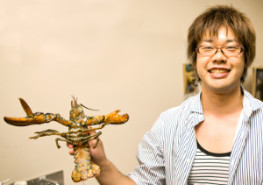 Yusuke Tomina, 2014–2019
homarus.tomina@gmail.com
Yusuke Tomina obtained his PhD in Life Science from Hokkaido University (Sapporo, Japan) in March, 2014. He carried out a series of behavioral and physiological studies of “goal-directed” gripping behavior in American lobster, working in the lab of Masakazu Takahata as a JSPS fellowship researcher (April, 2011-March, 2014). He worked as a neuroethologist with decapod crustaceans (lobster and crayfish) from undergraduate to post-doc in Hokkaido University. Dr Tomina joined the Wagenaar lab as a postdoc in August 2014.
Dr Tomina is interested in how we can understand animal behavior and its perception as a function of the nervous system and also likes the philosophy of “Krogh’s principle”. His primary research motivation is to describe animals’ perceptual world (referred to as "Umwelt") as internal neuronal processes by using physiological terms especially at the level of single cells and their network. He is also curious about phylogenic evolution of neuronal systems responsible for the broad aspects of animal behavior including perception, motor control and also cognition. He considers that, from the point of view of comparative biology, we neurobiologists are required to think about “which findings are likely to be biologically general and which are likely to be distinctive of a species” (as Eve Marder wrote in “Invertebrate Neurobiology”, 2007).
Dr Tomina went on to join the Mikami Lab at Hokkaido University as a Project Assistant Professor.
 Angela Bruno, postdoc, 2016–2017
Angela Bruno received her Ph.D. in Neuroscience from Rosalind Franklin University, The Chicago Medical School in North Chicago, IL. She worked in the lab of William Frost, and was co-mentored by Dr Mark Humphries at the University of Manchester.
In the Wagenaar Lab, Dr Bruno worked on identifing fundamental principles that describe how circuit connectivity and neuronal population dynamics give rise to behavior.
 Annette Stowasser, postdoc, 2013–2016
Dr Stowasser obtained her PhD from the University of Cincinnati in 2013 studying the optical system of the principal eyes of the diving beetle Thermonectus mamoratus in Elke Buschbeck’s lab.
In the Wagenaar Lab, Dr Stowasser worked on neuronal pathways of visual processing in the midbody ganglia of the medicinal leech. Afterwards, Dr Stowasser stayed at the University of Cincinnati where she is presently an Assistant Professor Educator.
 Andrew (Drew) Lehmkuhl, graduate student, 2015–2016
Drew Lehmkuhl earned his Bachelors in Neuroscience from the University of Cincinnati in 2013. As an undergraduate student, he worked with Dr Bruce Jayne, exploring how branch structure affects gap-bridging behaviors in brown treesnakes. Drew's research interests include organism–environment interaction and behavioral neuroscience.
His research in the Wagenaar Lab involved mechanoreception related to water disturbance in the medicinal leech. He obtained his M.S. in the summer of 2016 and joined the law school at UC the following fall.
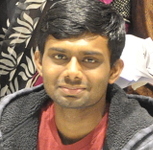 Arunkumar Muthusamy, graduate student, 2014–2016
Arun Muthusamy completed his Bachelors in Chemistry and Masters in Biology at IISER-Thiruvananthapuram, India (2009-2014). Under the guidance of Dr Tapas K. Manna, he studied how primary cilia assembly is effected by TACC proteins in RPE-1 cells. During the summer of 2013, he carried out a short-term project in the lab of Dr Sanjay Sane at NCBS, Bangalore on how termites of the species Odontotermes obesus rebuild their mound. The project was aimed at understanding what sensory cues they use to recognize the presence of damage to the mound. This project perked his interest in understanding how animals use different senses and how they go about integrating them to carry out day-to-day functions and the structures they use for doing so.
In the Wagenaar Lab, Mr. Muthusamy worked on intersegmental signaling of prey-relevant sensory information. After complting his Master's, Arun joined the lab of Elke Buschbeck as a PhD student.
Daniel Hofmann, undergraduate student, 2014–2015
Adam Stockfish, undergraduate student, 2015
Chris Tandoc, undergraduate student, 2014–2015
Undergraduate students Daniel ‘Dan’ Hofmann, Adam Stockfish, and Chris Tandoc used quantitative behavioral techniques to study the involvement of several sensory systems in prey localization.
Taylor Rupp, visiting undergraduate student, 2014
As an REU summer student in the lab, Taylor Rupp studied localization of visually perceived waves in the medicinal leech. She since joined Michigan State University as a graduate student.
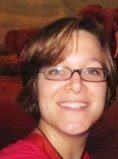 Cynthia Harley, postdoc, 2009–2012
Cynthia ‘Cindy’ Harley is interested in how information from sensory systems translates into changes in motor behavior. She earned her PhD studying the involvement of the central complex, a region of the insect brain thought to be involved in sensory-motor integration, in obstacle negotiation behaviors working in the lab of Roy Ritzmann in the Biology Department at Case Western Reserve University. Working in my lab, she has discovered that leeches use visual and mechanical cues differentially, and that this difference is under developmental control. She also discovered that sensory information is used differently in crawling leeches than in swimming leeches.
After her work in my lab, Cindy went on to do a second postdoc in the lab of Karen Mesce at the University of Minnesota to trace the flow of visual information from the leech’s head eyes into the brain. Cindy is currently an Associate Professor at Metropolitan State University.
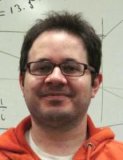 John Nagarah, postdoc, 2009–2012
John earned his Ph.D. in Physical Chemistry from UCLA and Caltech in 2009 under Prof. James R. Heath. For his thesis, he developed a batch fabrication process to create high performance planar patch-clamp wafers in quartz/glass and integrated them with multilayer PDMS microfluidic devices. In my lab, John Nagarah developed planar electrode technologies in quartz to simultaneously immobilize neural tissue, record extracellular signals, and image voltage sensitive dyes stained in neurons.
After his work in my lab, John took his expertise in microfabrication to Lam Research in Fremont, CA, before returning to Caltech where he is presently Assistant Director for Technology Transfer.
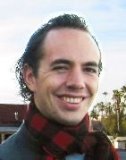 Pieter Laurens Baljon, visitor, 2010, 2011, 2012
Pieter Laurens Baljon graduated from the Neuroengineering group of Prof. Martinoia at the University of Genova, Italy. As a visitor to our lab in 2010, he worked on interfacing the leech ganglion with a 60-channel microelectrode array. Performing spike sorting and source separation on these recordings, one can follow a large number of cells at high temporal resolution, and for extended periods. With a simultaneous recording using voltage-sensitive dyes it becomes possible to link the electrophysiological signal to individual cells and their function. A year later (after accepting a postdoctoral position at the Center for Neurogenomics and Cognitive Research at the Vrije Universiteit Amsterdam) and again in 2012, he returned to our lab to study how a neural reflex pathway resolves sensory conflicts. Pieter Laurens presently works as a Senior Data Scientist for Entis in The Netherlands.
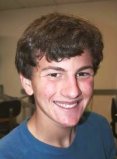 Matthew Rossi, high school student, 2011–2012
Matthew Rossi’s focus was on elucidating during which phases of prey localization behavior leeches actually take in sensory cues.
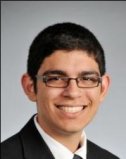 Javier Cienfuegos, high school student, 2010–2011
Javier Cienfuegos worked on prey localization experiments with Cindy Harley.
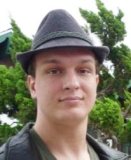 Andrew Krause, technician, 2009–2012