|
Research Interests
|
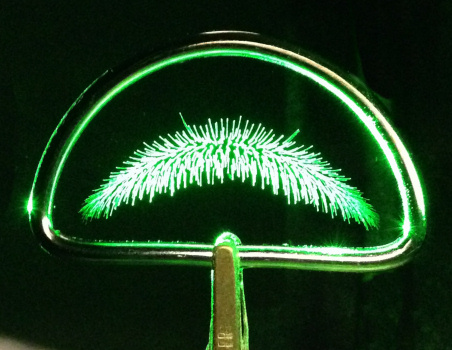
The Physics of Crystal Growth and Pattern Formation in Ice
(1997-present). This
project is essentially a case study of the growth of ice crystals from
the vapor phase, the purpose of which is to better understand
molecular attachment physics and pattern formation in nonlinear
nonequilibrium systems. The diverse
morphologies seen in snow crystals are largely due to the puzzling
temperature dependence of ice crystal growth rates, a phenomenon that
was discovered in the 1930s and only recently explained. We have been
making precise measurements of the growth rates of the
different facets of ice crystals under controlled conditions to gain
insights into the temperature-dependent molecular structure of the ice
surface and how it affects crystal growth.
Website: SnowCrystals.com
Review Paper: Physical
Dynamics of Ice
Crystal Growth
Monograph: Princeton
University Press (Preview version arxiv.org/abs/1910.06389)
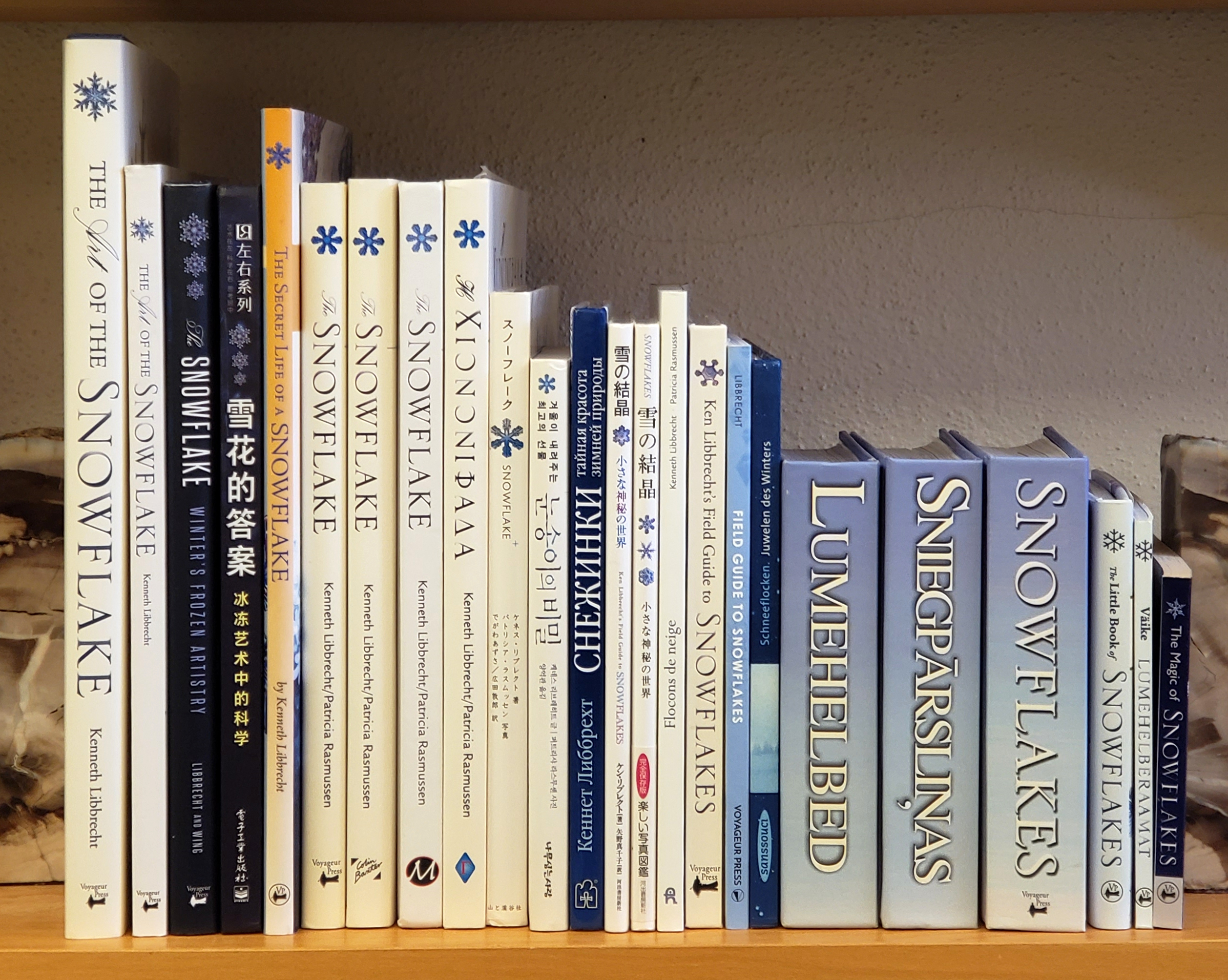
Snowflake
Books |
|
  >> Laboratory
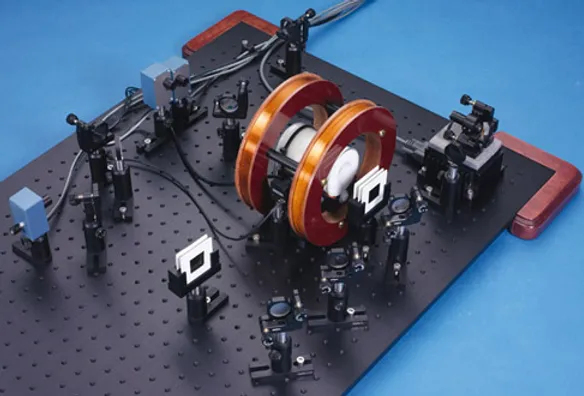
Instrumentation for Physics Education (2005-present). We
developed numerous instruments that are being used in physics teaching
labs at Caltech and at universities around the world, including a
tunable diode-laser spectrometer, a picrometer-resolution laser
interferometer, a magneto-mechanical harmonic oscillator, and a set of
microparticle ion traps. KGL also worked with the companies TeachSpin
and Newtonian Labs to commercialize these teaching tools. >> Laboratory
Instrumentation for Physics Education (2005-present). We
developed numerous instruments that are being used in physics teaching
labs at Caltech and at universities around the world, including a
tunable diode-laser spectrometer, a picrometer-resolution laser
interferometer, a magneto-mechanical harmonic oscillator, and a set of
microparticle ion traps. KGL also worked with the companies TeachSpin
and Newtonian Labs to commercialize these teaching tools.
Course Information:
Ph 3 Introductory Physics Laboratory
Ph 77 Advanced Physics Laboratory
|
|
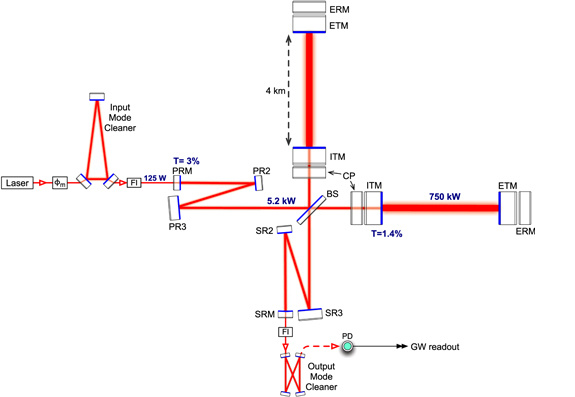
>> Advanced detector development for the Laser Interferometer
Gravitational-wave Observatory (LIGO) (1999-2014).
The LIGO project studies gravitational-wave signals from violent
astrophysical events, such as coalescing neutron stars
and black holes. For more information on all aspects of the LIGO
project, see the LIGO
web site. Our work in LIGO focused on: 1) an instrument called the Thermal Noise Interferometer (TNI),
which was a test-bed suspended interferometer at Caltech, and 2) a photothermal interferometer for measuring
the properties of optical
coatings used in the LIGO detectors.
|
|

>>
Laser Cooling and Trapping of Neutral Atoms (1993-2000). We
built laser-cooled magneto-optical atom traps in the early 1990s that
could capture and observe individual cesium atoms. This
technology was used to investigate the dynamics of atom trapping in the
low-atom-number limit, and we also investigated the use of
microfabricated planar current structures for making microscopic
magnetic atom traps.
|
|

>> Helioseismology and the Large-Scale Structure of the Sun
(1984-1995). Convective
motions near the solar surface generate acoustic waves that resonate
inside the Sun, resulting in global oscillation modes with periods
around five minutes. We made extensive measurements
of these
global modes in the late 1980s at Big Bear Solar Observatory, recording
Doppler images of the entire solar disk each minute for many
months. Analysis of these tens of thousands of images allowed us
to
measure the solar mode frequencies to unprecedented accuracy. By
examining the mode frequencies and amplitudes, as well as the frequency
splittings of mode multiplets, information about the interior structure
and dynamics of the Sun could be extracted, including a measure of the
interior rotation rate of the Sun.
|
|
Miscellaneous Highlights
|
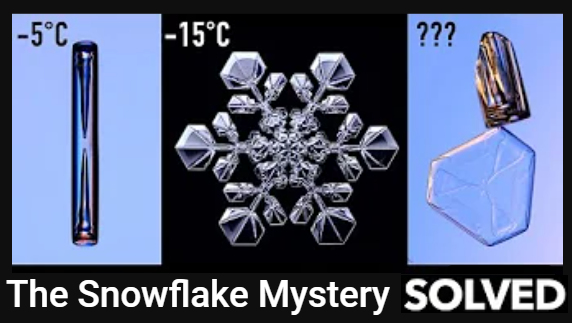
>> A Veritasium video describing the physics of snow crystals...
viewed over 10 million times. This video describes "electric" ice needles,
movies of growing "designer" snow crystals, "identical twin" snow
crystals, and much more!
|

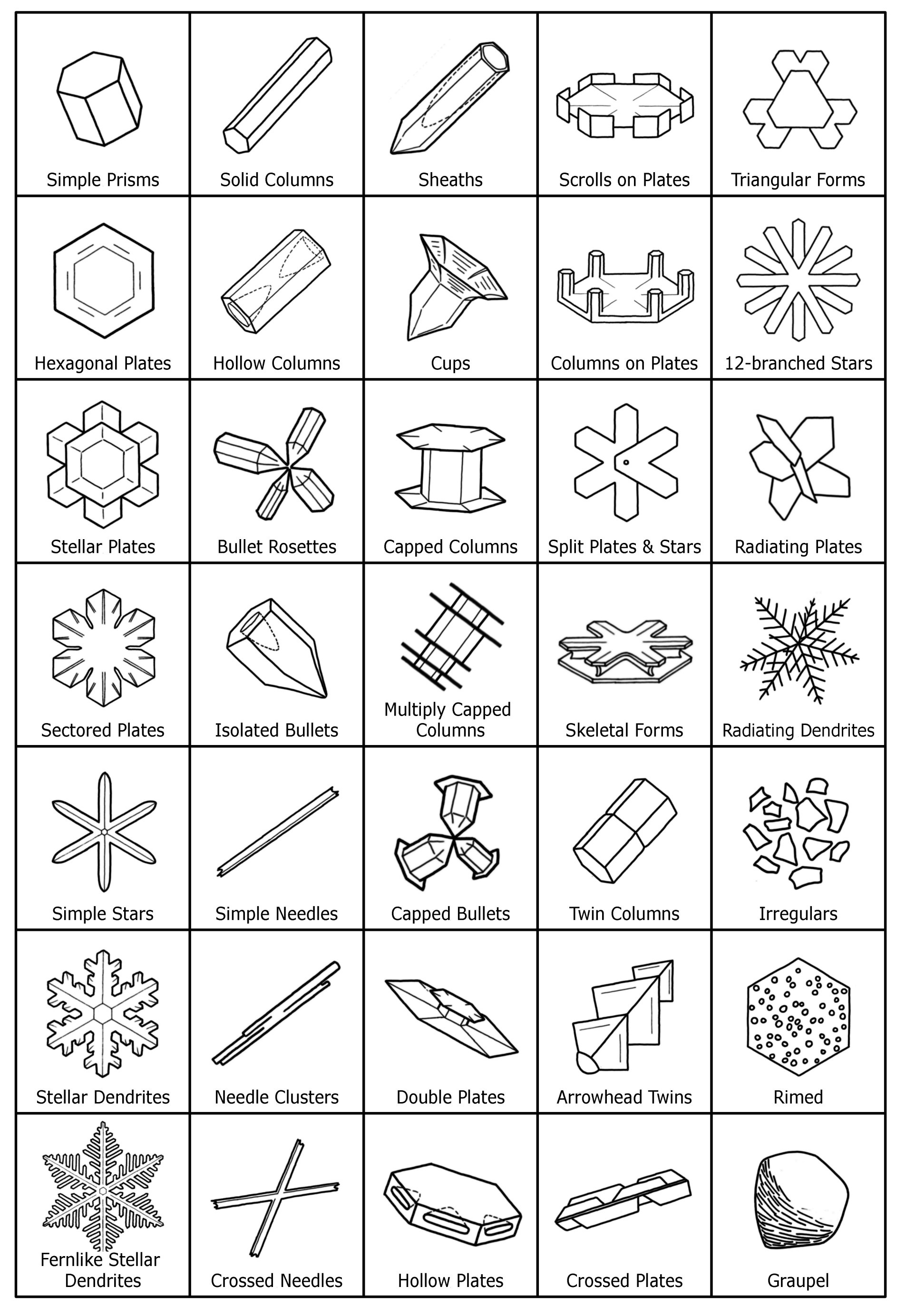
>> Explaining the Nakaya diagram. Japanese physicist
Ukichiro Nakaya created the first laboratory-grown snow crystals in the mid 1930s,
observing how their morphology changes with temperature and water-vapor
supersaturation. These observations are summarized in the Nakaya diagram
shown on the right, which remained largely unexplained for the next 75
years. Especially puzzling was why snow crystals grow into distinctly
platelike or columnar forms at different temperatures.
After quantifying snow-crystal growth rates under a variety of conditions, we developed a comprehensive physical model
that finally explains the various molecular processes that yield the
Nakaya diagram. (This is "The Snowflake Mystery SOLVED" in the above
video.)
|
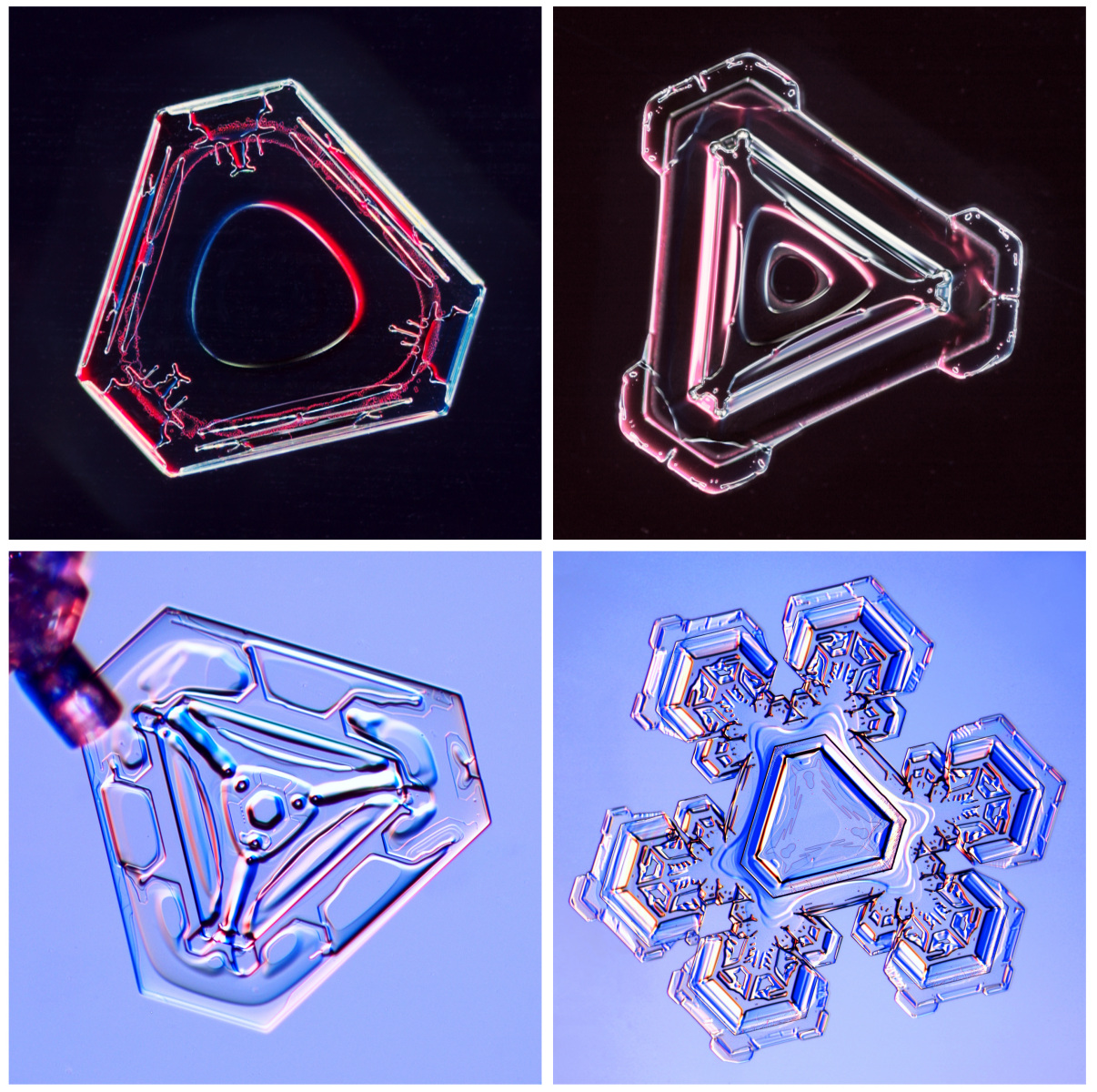
 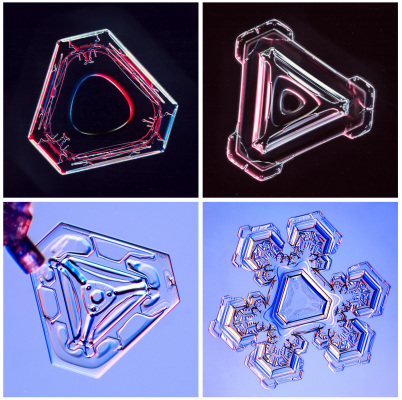 >> Explaining triangular snow crystals.
First documented in 1820, triangular snow-crystal morphologies in
nature remained an unsolved scientific puzzle for the next 200 years.
Finally, using our newly developed model of snow-crystal formation, we
were able to explain the physical mechanism responsible for this unusual form, thereby growing triangular crystals on ice needles with high fidelity in the lab (right two photos). >> Explaining triangular snow crystals.
First documented in 1820, triangular snow-crystal morphologies in
nature remained an unsolved scientific puzzle for the next 200 years.
Finally, using our newly developed model of snow-crystal formation, we
were able to explain the physical mechanism responsible for this unusual form, thereby growing triangular crystals on ice needles with high fidelity in the lab (right two photos).
|

>> The physics of snow crystals. (Princeton
University Press,
2022) This extensive monograph describes the panoply of physical
processes underlying ice crystal growth and the formation of snow
crystals. It is the first volume of its kind since Nakaya's classic
book published in 1950. (A free preview version is available at arxiv.org/abs/1910.06389.) |
 
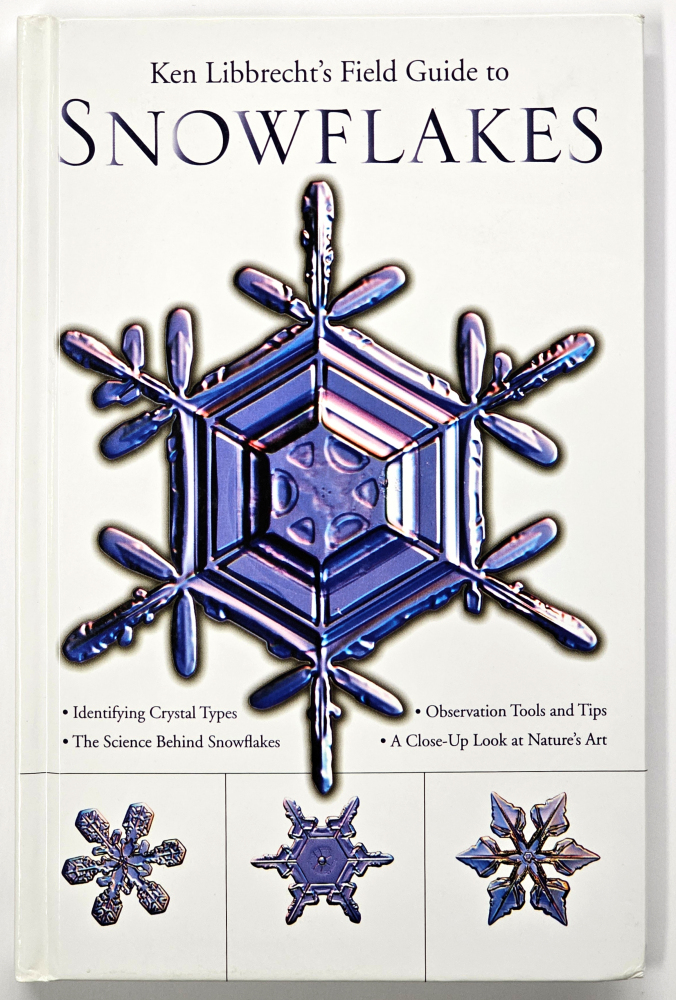
>> Ken Libbrecht's Field Guide to Snowflakes. (Voyageur
Press, 2006) This book describes the remarkable diversity of snow
crystal morphologies you might find falling on your sleeve during a
quiet snowfall. It was the first book of its kind, patterned after
field guides to birds, insects, flowers, and other natural phenomena.
|
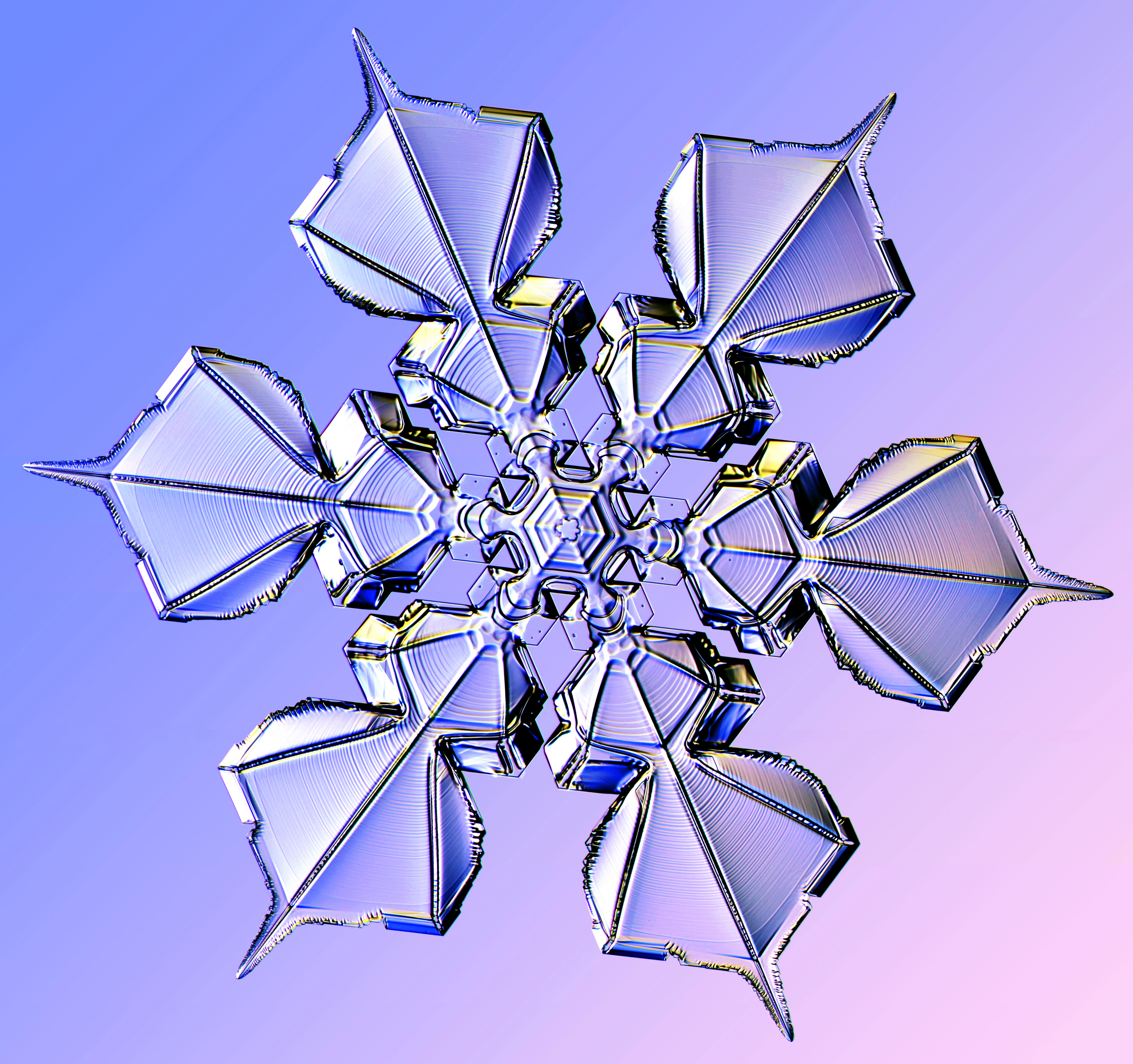
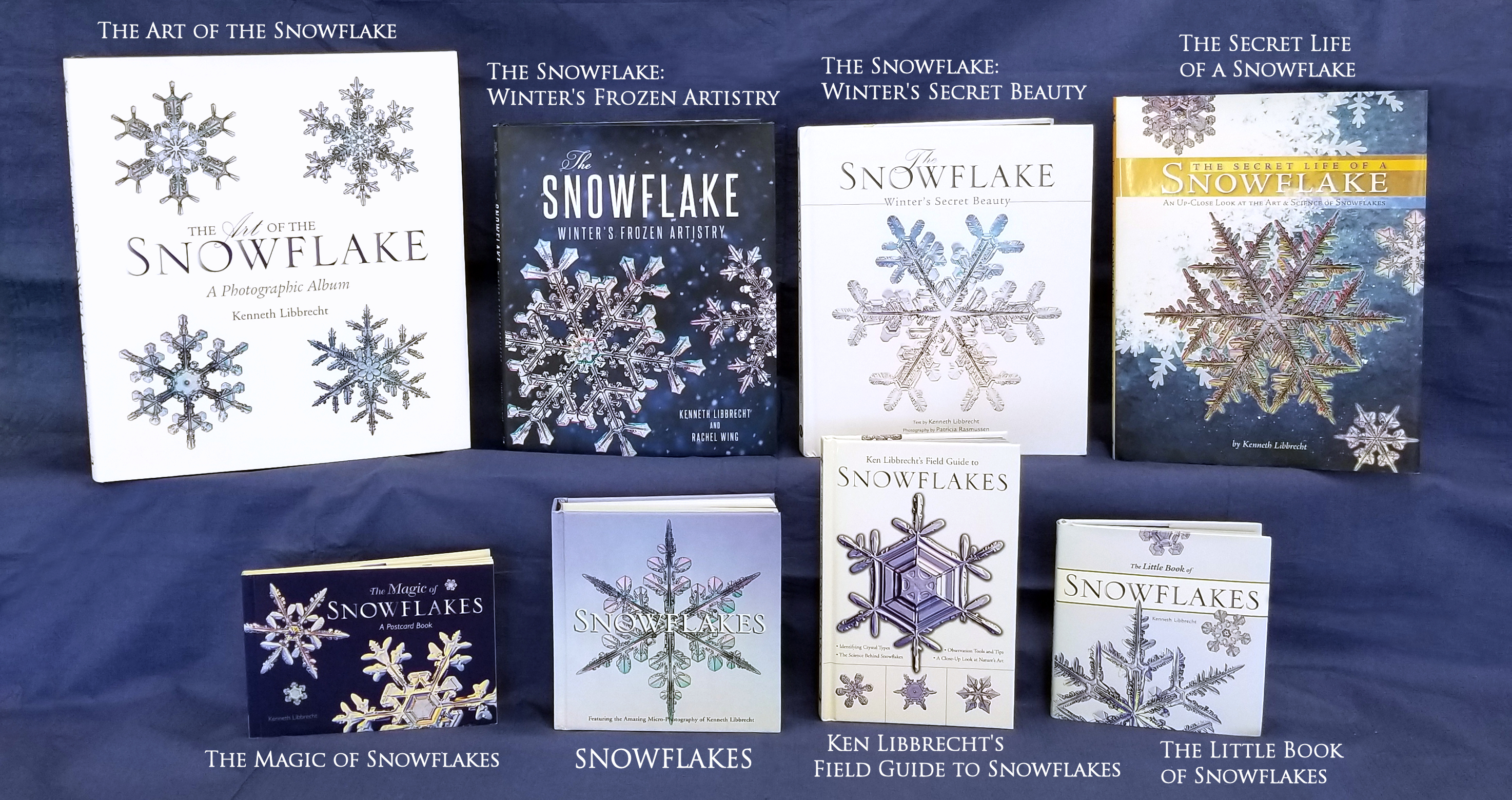
 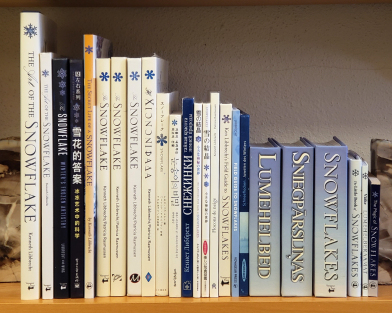 >> Snowflake science & photography.
While studying the physics of ice crystal growth, KGL advanced
snowflake photography using high-resolution microscopy and novel
illumination techniques. This led to a series of books describing both
the beauty and science of snowflakes. >> Snowflake science & photography.
While studying the physics of ice crystal growth, KGL advanced
snowflake photography using high-resolution microscopy and novel
illumination techniques. This led to a series of books describing both
the beauty and science of snowflakes.
|
|
 
>> Snowflake stamps. Photographs taken by KGL were featured in several postage stamps over the years. About 3 billion USPS snowflake stamps were sold during the 2006 holiday season (back when sending Christmas cards was still popular).
|

>> World's largest snow crystal. This monster snow crystal
measures 10.0 mm from tip to tip, photographed by KGL in Cochrane,
Ontario on December 30, 2003. Click on the image for a larger view. It
is listed in the Guinness World Records as the "Largest snow crystal" ever documented... still the record holder at the time of this writing (in 2025).
|
 
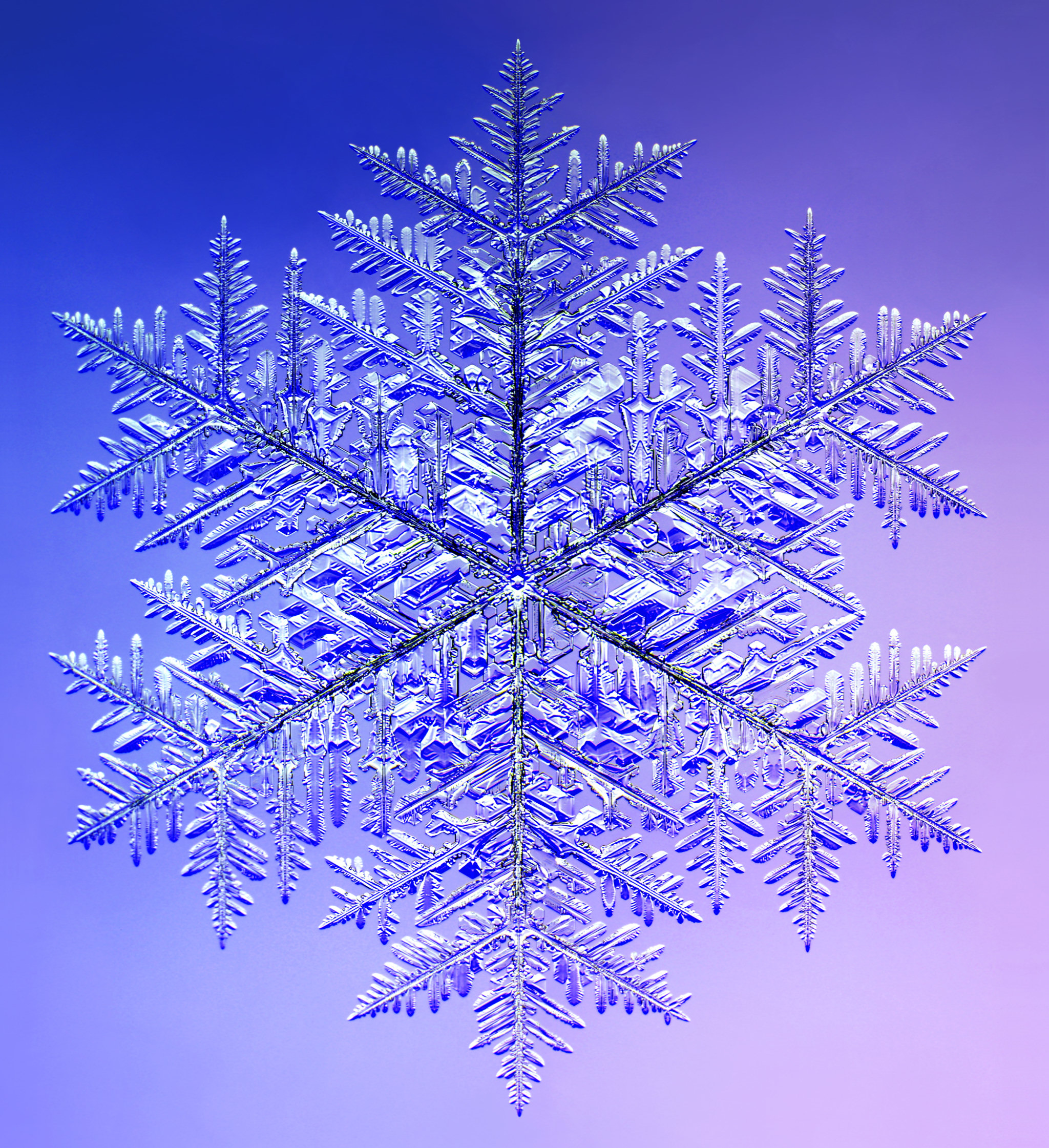
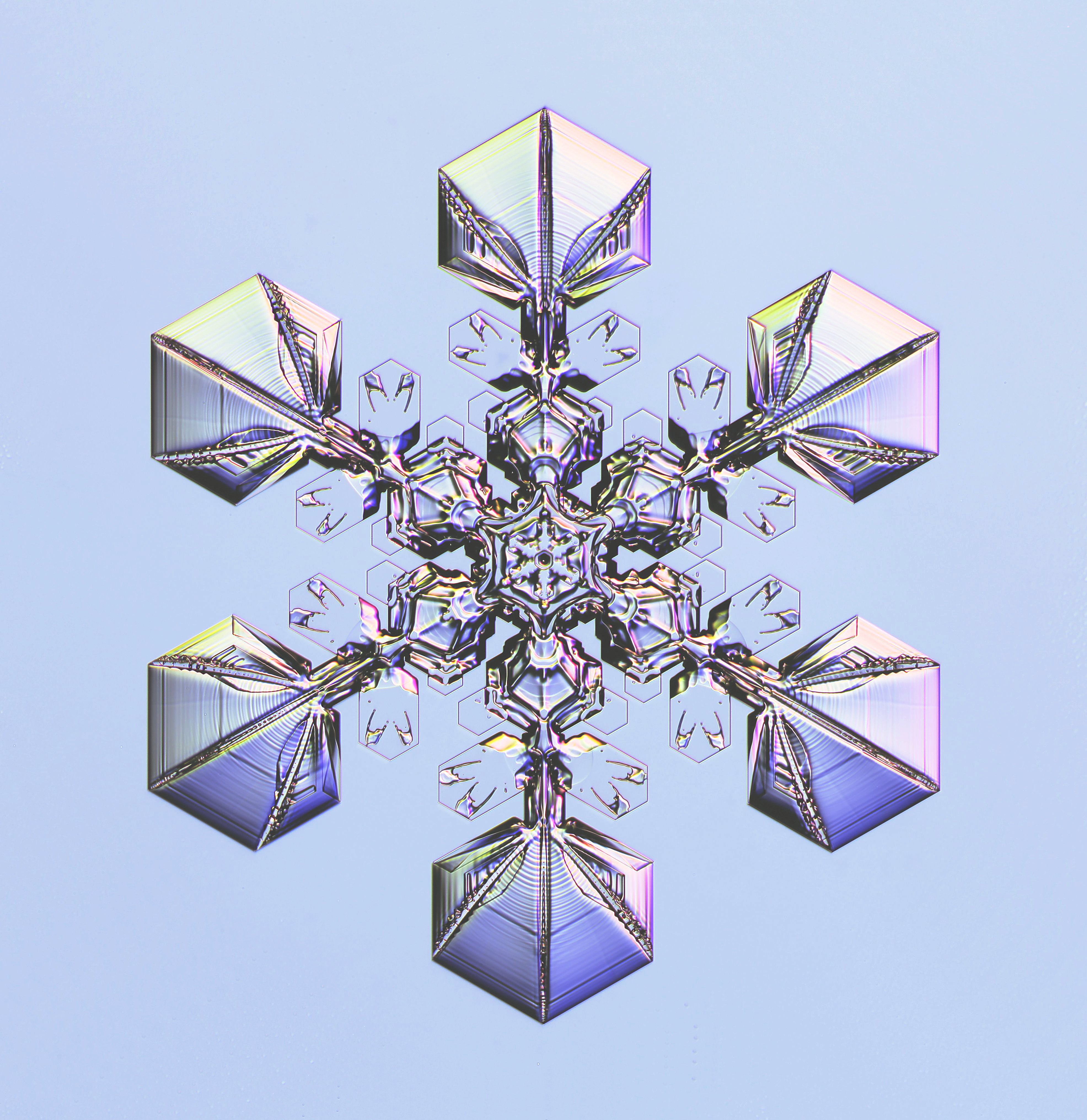
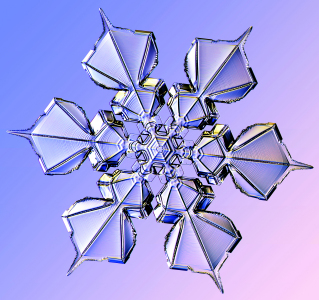
>> Designer snowflakes.
While studying the physics of snow crystal formation, we also managed
to "engineer" the creation of synthetic snow crystals in the lab. These
crystals are made of ice, grown from water vapor, much like what
happens in nature. Because they grow on a fixed substrate, however, we
are able to observe them under the microscope as they develop. It takes
about 30-60 minutes to produce each snow crystal. |
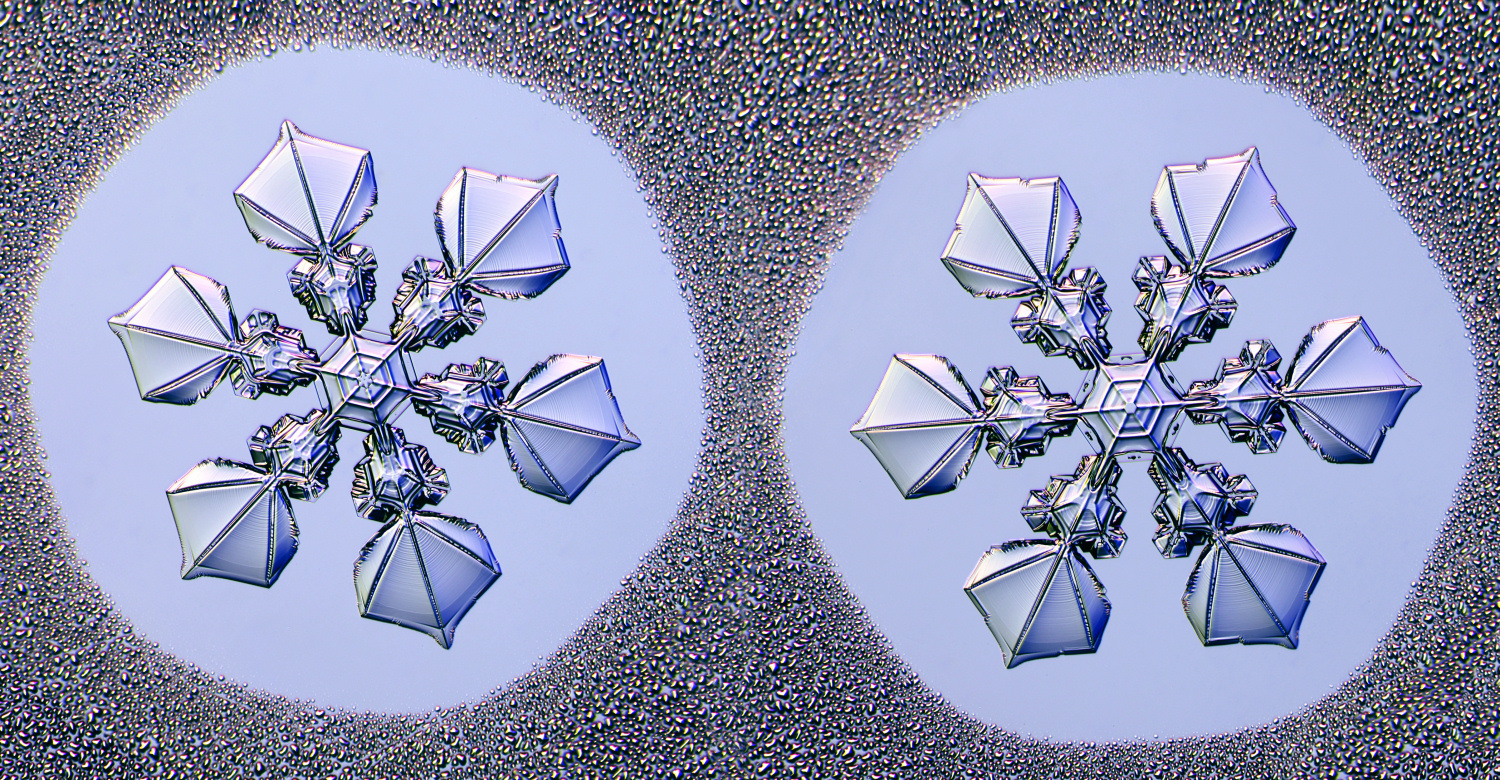
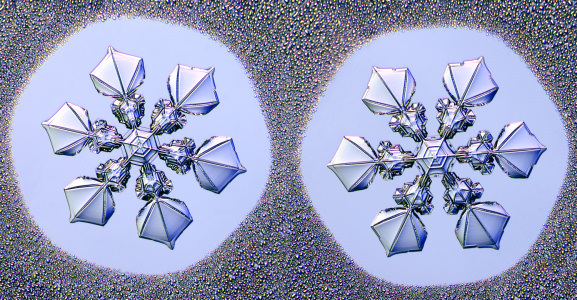 >> Identical-twin snowflakes.
By growing two designer snow crystals side by side at the same time, it
is possible to produce "identical-twin" snowflakes. Like
identical-twin people, these cyrstals are not perfectly identical in
every detail, but they are clearly closely related. Because so many of
us learn in elementary school that "no two snowflakes are alike", this
feat ofsnowflake engineering received a fair bit of press coverage. >> Identical-twin snowflakes.
By growing two designer snow crystals side by side at the same time, it
is possible to produce "identical-twin" snowflakes. Like
identical-twin people, these cyrstals are not perfectly identical in
every detail, but they are clearly closely related. Because so many of
us learn in elementary school that "no two snowflakes are alike", this
feat ofsnowflake engineering received a fair bit of press coverage.
|
>> More snowflake adventures.
1) Talking about snowflakes on the Martha Stewart Show (February 8, 2007).
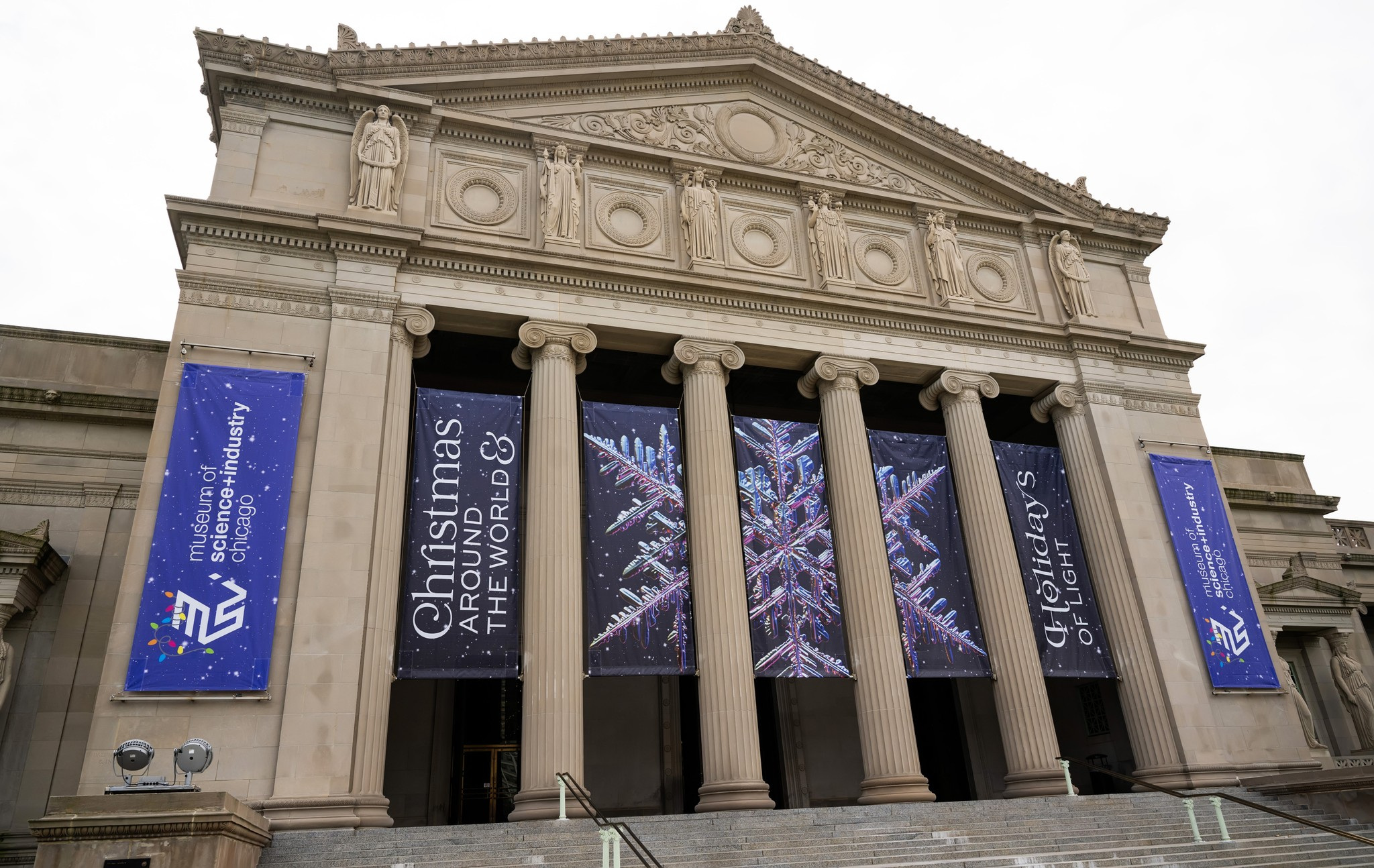
2) Snowflake photographs displayed large at the Chicago Museum of Science and Industry (2023).
3) Being hired as the "snowflake consultant" for the movie Frozen...
helping Disney make proper six-sided snow crystals throughout the film.
(Super exciting when the movie went on to win the Academy Award for
Best Animated Feature Film in 2014!)
  
|
|
 
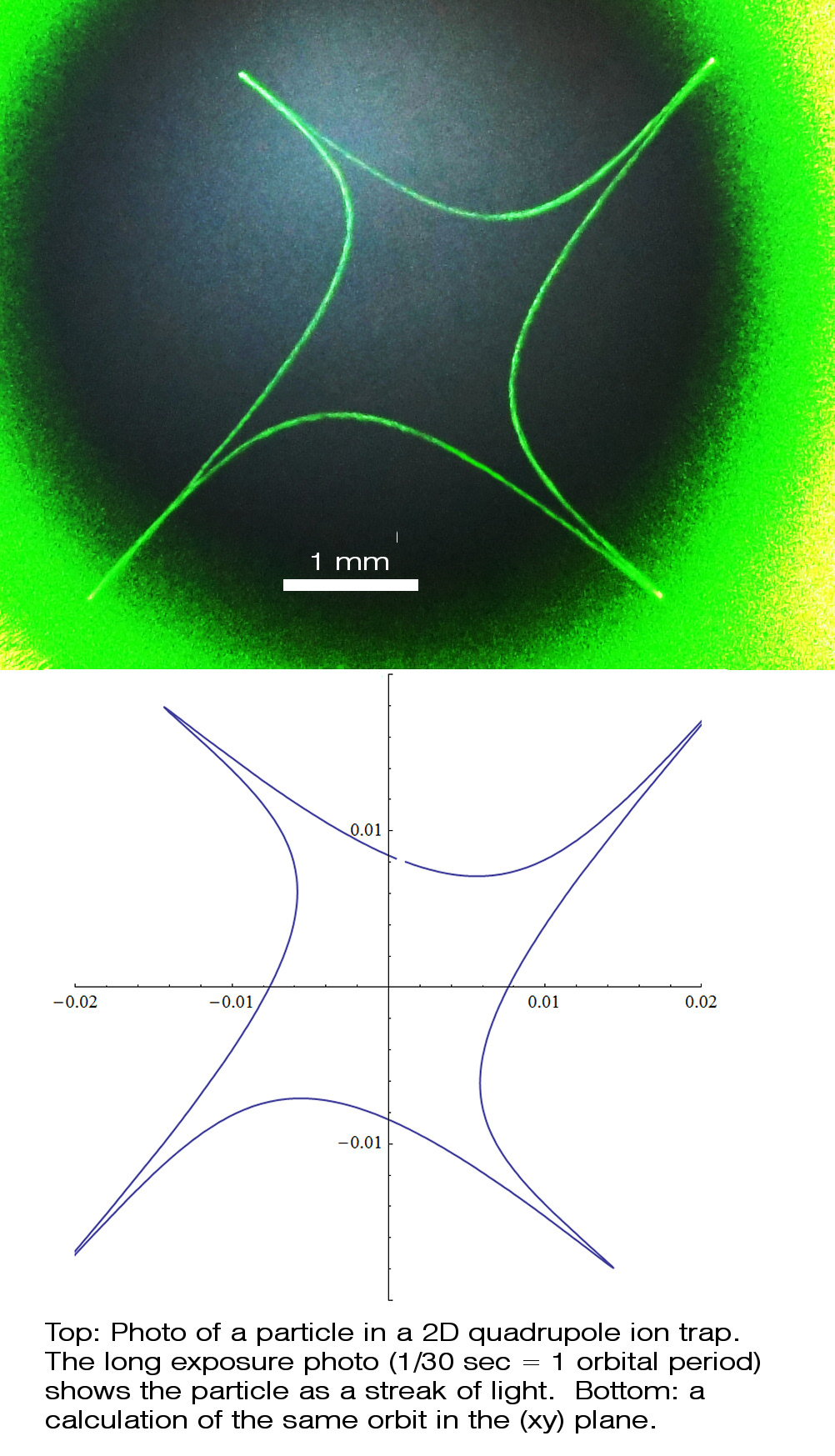
>> Nonlinear dynamics in Microparticle Electrodynamic Traps (METs).
While developing an ion-trapping experiment for the undergraduate
teaching labs at Caltech, we observed some unusual dynamical behaviors
that had not been documented previously. The first image on the right
shows an "extended orbit" of a
25-micron-diameter particle in a 2D quadrupolar MET. The formation of
this and similar orbits requires nonlinear damping of the particle
motion.
Remarkably, many individual particle orbits readily
combine to form a tightly bound cluster of orbiting particles, held
together by a self-sustaining vortex of air flow driven by the
particles themselves (2nd photo). We dubbed this new phenomenon the "trapnado". It may not be good for anything, but it is fascinating to watch. (Click on the image to see a video.)
We also developed techniques for easily creating and observing METs in undergraduate teaching labs.
|
|

>> The first LIGO detection. A most exciting event at Caltech!
|
|

>> Precision measurement of solar oscillations. The graph on the right shows measurements of p-mode oscillations
in the Sun measured at Caltech's Big Bear Solar Observatory in the
1980s. Note that the error bars on the data points have been magnified 1000x to
make them visible. Comparing these mode frequencies (some measured with
±10 ppm accuracy) with models yields information about the detailed structure and dynamics of the solar interior.
|
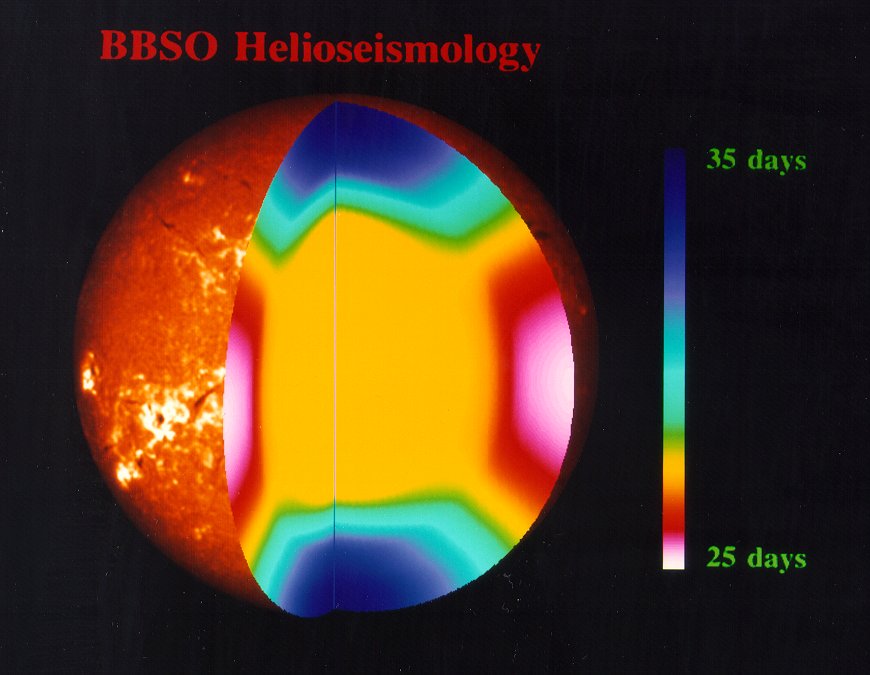
>> Discovering the solar interior rotation. Measurements
of frequency splittings (comparing co-propagating and
counter-propagating modes) can be used to infer the Sun's rotation
profile as a function of depth and latitude. The picture on the left emerged
in the late 1980s, revealing a nearly depth-independent differential
rotation throughout the convection zone (above r = 0.7Rsun). In the
absence of convection (below r = 0.7Rsun), the core exhibits
essentially uniform rotation. Why turbulent convection in the Sun
produces this particular rotation profile remains a largely unsolved puzzle.
|

>> Time-dependent oscillation frequencies. With several years of measurements, we were able to definitively observe p-mode frequency changes
arising from the solar magnetic cycle. Modeling revealed that
latitude-dependent sound-speed changes near the Sun's surface were
largely responsible for the observations. This work also explained the
quadratic splitting in p-mode frequencies, which had been an
outstanding helioseismology puzzle.
|
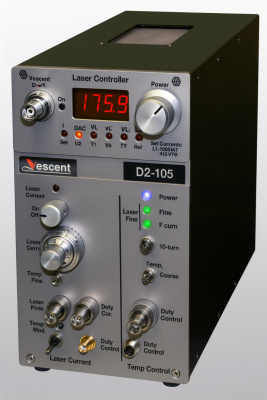 >> A Low-Noise High-Speed Diode Laser Current Controller. Libbrecht and Hall developed a novel low-noise current controller for diode lasers in 1993, which was quickly adopted into commercial products.
Remarkably, after 30+ years, no one has demonstrated a better noise
performance for this product type (room temperature
operation, currents of order 100mA, suitable for a bench-top
instrument, etc.).
>> A Low-Noise High-Speed Diode Laser Current Controller. Libbrecht and Hall developed a novel low-noise current controller for diode lasers in 1993, which was quickly adopted into commercial products.
Remarkably, after 30+ years, no one has demonstrated a better noise
performance for this product type (room temperature
operation, currents of order 100mA, suitable for a bench-top
instrument, etc.).
|
|